Crafting Interpreters (IV):Resolver 铺路,Interpreter 填值
Crafting Interpreters (IV):Resolver 铺路,Interpreter 填值
jlox 如何不用第二套运行时,就跑起 class、this、继承和 super
TL;DR:jlox 的对象系统并不是一套额外的 OOP 宇宙。class 会变成 LoxClass,instance 会变成 LoxInstance,method 仍然是 LoxFunction。this 和 super 最后也仍然是 environment 里的名字。resolver 先记录这些名字的位置,interpreter 再在运行时把真实的值放进去。
上一篇文章停在了“树开始跑起来”的地方:expression 产生值,statement 产生效果,environment 保存名字,call 创建局部世界,closure 让某些局部世界在函数返回后继续活着。
现在来到 class,看起来像是进入了一个新大陆。对象、字段、方法、构造函数、继承、this、super——这些概念似乎需要一整套新的机器。
但 jlox 最有意思的地方恰好是:它基本没有换机器。
对象系统仍然建立在旧组件上:
source syntax
  → parser shape
  → resolver distances
  → interpreter values
  → environment lookup
  → closure capture
所以这篇文章的主线是:
从 Lox 的 class 语法出发,看 resolver 和 interpreter 如何配合,让 class / instance / this / inheritance / super 真正跑起来。
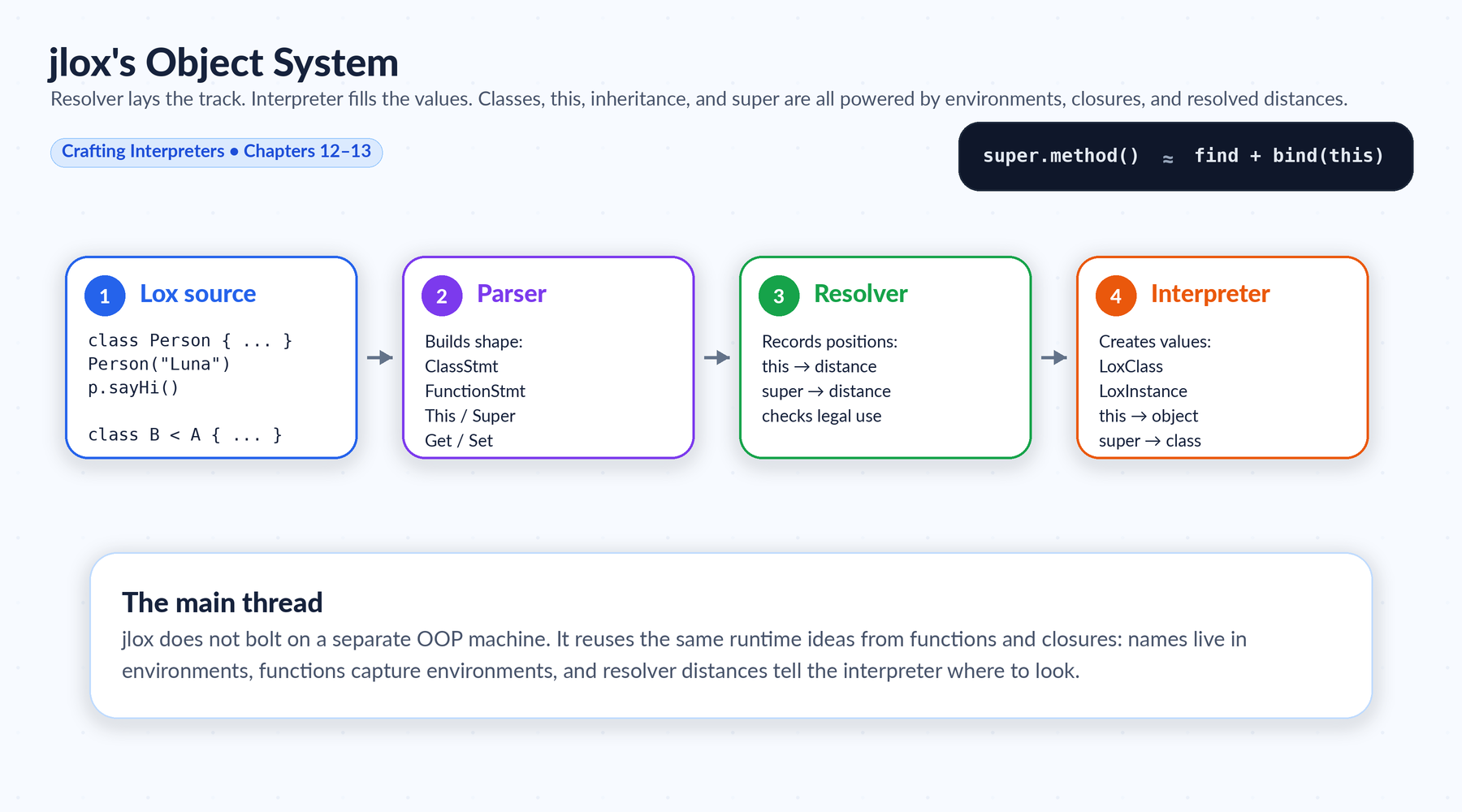
Figure 1. class 看起来是一个很大的功能,但实现反复回到两个动作:resolver 记录名字在哪里,interpreter 创建真实的运行时值。
1. 先看 Lox 的 class 长什么样
先不要急着看实现。先看表面语言:
class Person {
  init(name) {
    this.name = name;
  }

  sayHi() {
    print "Hi, I am " + this.name;
  }
}

var p = Person("Luna");
p.sayHi();
如果你写过 JavaScript、Python、Java 或 Ruby,这段代码会有熟悉感。但 Lox 的设计又刻意保持得很小。
第一,没有 new 关键字。创建对象时直接调用 class:
Person("Luna")在运行时,class object 本身是 callable。调用它,就创建一个 instance。
第二,field 不会提前写在 class body 里。字段是在执行赋值时出现的:
this.name = name;这行代码会把 name 放到当前 instance 上。class declaration 本身没有字段列表。
第三,method 在 class body 里不写 fun:
sayHi() {
  print this.name;
}
parser 已经有 function declaration 的结构,所以 method 可以复用这个结构,只是语法上更轻一点。
第四,initializer 固定叫 init,不是和类同名:
init(name) {
  this.name = name;
}
这意味着每个 class 都用同一个 initializer 名字,class name 只负责表示 class 本身。
第五,继承用 <:
class B < A {
  test() {
    super.method();
  }
}
< 可以理解成“B 在 A 下面”或者“B 派生自 A”。当 B 找不到某个 method 时,就继续去 A 里找。当 B 想明确从 A 开始找时,就使用 super.method()。
这就是从用户视角看到的全部对象系统。真正有趣的是,每个表面特性都可以对应到已有的 runtime 模型里。
2. Parser:先做形状,不负责运行
parser 不需要知道 this 是谁。它也不需要知道 super 指向哪个 class。parser 的任务只是认出结构。
这段源码:
class B < A {
  test() {
    super.method();
  }
}
会被解析成一个 statement 形状的 AST 节点:
ClassStmt
  name: B
  superclass: Variable(A)
  methods:
    FunctionStmt test(...)
      body:
        Super(method)
class declaration 是 statement,因为它会在当前 environment 里引入一个名字。class 里的 method 复用之前的 function statement 节点,因为 method 和 function 一样,都有名字、参数和函数体。
parser 还会为对象相关语法加上 expression 节点:
this                 → This expression
super.method          → Super expression
object.field          → Get expression
object.field = value  → Set expression
这里有一个重要边界:
Parser 只认结构,不附加运行时意义。
parser 看到 this.name,可以构造 Get(This, name)。但它不知道 this 将来会是哪一个对象。parser 看到 super.method,可以构造 Super(method)。但它也不知道真正的 superclass object 是谁。
这些缺失的信息会被拆给后面两条线:resolver 负责决定名字应该去哪里找,interpreter 负责在运行时创建并填入真实对象。
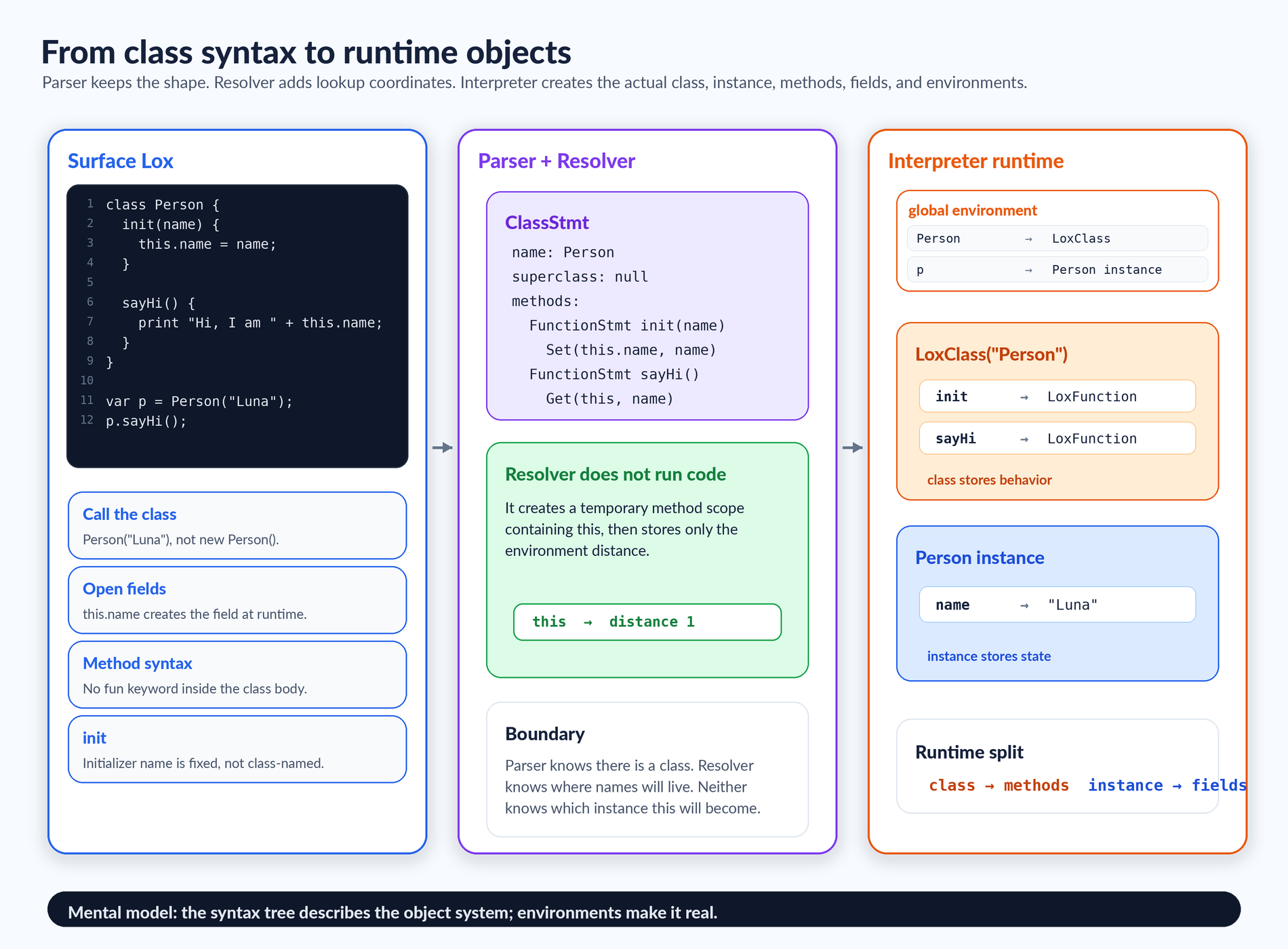
Figure 2. parser 和 resolver 先准备地图;interpreter 再把 LoxClass、LoxInstance、field、method 和 environment 放到地图上。
3. Resolver:提前铺轨道,但不放火车
resolver 不执行代码。它不会创建 instance,也不会把 this 赋值成 p。它做的是解释执行之前的静态分析。
对 class 来说,resolver 的工作主要是检查合法性和记录位置:
1. 当前是不是在 class 里面?
2. this 在这里能不能用?
3. super 在这里能不能用?
4. this 将来要向外走几层 environment?
5. super 将来要向外走几层 environment?
6. method body 里的变量引用要如何解析?
一个很好用的比喻是:resolver 负责铺铁轨。它决定之后 lookup 应该沿着哪个方向走。但此时轨道上还没有火车。
看一个简单方法:
class Person {
  sayHi() {
    print this.name;
  }
}
resolver 进入 sayHi 时,会创建一个临时 scope,里面放一个名字:
scope:
  this
这不是一个真正的 runtime environment。它里面没有真实对象。它只是静态分析时使用的 scope。
然后 resolver 遇到 this 时,就可以记录:
this 距离未来的 call environment 有 N 层interpreter 会把这个数字存在 locals map 里,key 是那一个 expression node。将来解释执行到同一个 this expression 时,interpreter 不需要动态搜索,可以直接按照 distance 跳到对应 environment。
关键句是:
Resolver 记录的是位置,不是值。
这个句子也能解释几个 class 相关错误。class 外面不能用 this,因为 resolver 没有 class scope 可以挂它。没有 superclass 的 class 里面不能用 super,因为运行时不会有 super environment。class 不能继承自己,因为 superclass reference 会指回同一个 class name。
resolver 并没有“理解对象”。它只是非常严格地处理名字。
4. Interpreter:把 class 语法变成 runtime object
现在开始执行。
jlox 执行下面的 class declaration:
class Person {
  init(name) {
    this.name = name;
  }

  sayHi() {
    print this.name;
  }
}
它会创建一个 LoxClass object,并把它存进当前 environment:
global environment
  Person → LoxClass("Person")
LoxClass 内部按名字保存 methods:
LoxClass("Person")
  methods:
    init  → LoxFunction
    sayHi → LoxFunction
接着执行这一行:
var p = Person("Luna");因为 class 实现了 callable 接口,所以调用 Person 会创建一个 LoxInstance:
global environment
  Person → LoxClass("Person")
  p      → Person instance
instance 自己有 field map:
Person instance
  fields:
    name → "Luna"
这给出了对象系统最重要的分工:
class    存 method
instance 存 field
正因为有这个分工,method 可以在所有 instance 之间共享,而每个 instance 又能有自己的状态。
这也解释了 property access。执行:
p.namejlox 会去 instance 的 field map 里找。但执行:
p.sayHi通常不会有一个叫 sayHi 的 field,于是它会去 instance 的 class 上找同名 method。如果找到了 method,interpreter 不会直接返回原始函数,而是先把这个 method 绑定到当前 instance。
这就是 this 变成真实值的地方。
5. this:resolver 写好地址,interpreter 放入对象
再看这个调用:
var p = Person("Luna");
p.sayHi();
最关键的步骤不是最后那对括号,而是 call 之前的 property access:
p.sayHiinterpreter 从 class 里拿到 method 以后,会做:
sayHi.bind(p)bind 会创建一个新的 environment,它的 parent 是 method 原来的 closure:
this environment
  this → p
然后这个 bound function 被调用。调用时会照常创建 call environment,用来保存参数和局部变量,而这个 call environment 会指回 this environment。
形状大概是:
sayHi call environment
  local variables...
  ↓ enclosing
this environment
  this → p
  ↓ enclosing
method closure
  ...
所以在 interpreter 里,this 不是魔法。它就是 environment 里的一个名字。
method binding 的核心是:
LoxFunction bind(LoxInstance instance) {
  Environment environment = new Environment(closure);
  environment.define("this", instance);
  return new LoxFunction(declaration, environment, isInitializer);
}
resolver 已经提前记录了 this expression 应该向外走几层。interpreter 现在保证那一层 environment 存在,并且里面真的放着当前 instance。
所以:
this.name意思是:
1. 按 resolver distance 找到 this。
2. 这个 this 的值是 p。
3. 去 p 的 field map 里读 name。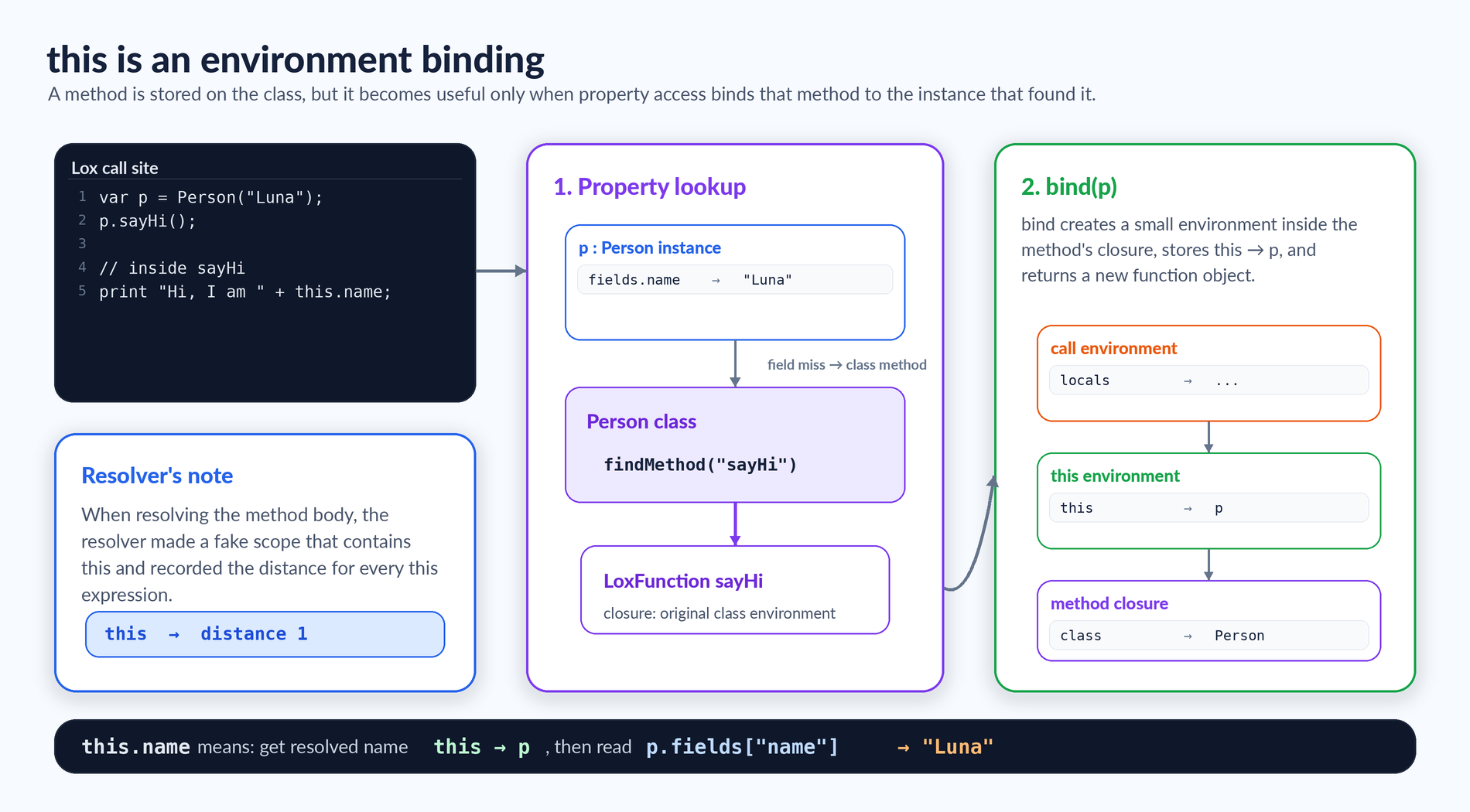
Figure 3. this 最后就是 bind(instance) 创建出来的普通 environment binding。resolver 记录去哪里找;interpreter 创建能让 lookup 成功的 environment。
这就是第 12 章的核心。jlox 没有把 this 做成隐藏的全局变量,也没有把它做成 interpreter 上的特殊 slot。它把 this 做成了一个被 capture 的 environment binding。
method 仍然是 function。对象是通过把这个 function 绑定到 instance 上提供的。
6. init:constructor 只是 class 自动调用的特殊 method
理解了 this,initializer 就很自然。
执行:
var p = Person("Luna");jlox 大概做的是:
1. 创建一个新的 Person instance。
2. 查找名为 init 的 method。
3. 把 init bind 到这个新 instance。
4. 调用 init("Luna")。
5. 返回这个新 instance。
initializer body:
init(name) {
  this.name = name;
}
使用的 this 机制和普通 method 完全一样。没有另一套 constructor binding 规则。
init 的特殊之处在两个地方:
class call 会自动找 init
initializer 最终返回新 instance
第二点很重要。就算 initializer body 自然结束,class call 也会返回 instance。就算之后直接调用 init,jlox 也会把 initializer method 当成返回 this 处理。为了避免让程序变得混乱,resolver 会禁止在 initializer 里 return 一个值。
但主模型没有变:
init 是 method
method binding 创建 this
class call 自动选择调用 init
7. 继承先从 method lookup 开始
现在从第 12 章进入第 13 章。
不要一上来就看 super。先看最简单的继承方法:
class A {
  method() {
    print "A method";
  }
}

class B < A {}

B().method();
运行时规则很小:
B.findMethod("method")
  如果 B 有 method:返回它
  否则问 A.findMethod("method")
继承首先改变的是 method lookup。subclass 保存一个 superclass reference,当 subclass 里找不到 method 时,findMethod() 就沿着 superclass chain 往上走。
instance 仍然是一个 B instance:
B() → B instance如果 method 是在 A 里找到的,这不会把对象变成 A instance。method 只是从 A 里找到。真正调用时,它仍然会 bind 到原来的 B instance。
这个细节是理解 super 的前提。
8. super:改变查找起点,但不改变 this
下面这个例子把整件事都暴露出来:
class A {
  method() {
    print this.name;
  }
}

class B < A {
  test() {
    super.method();
  }
}

var b = B();
b.name = "B instance";
b.test();
输出是:
B instance为什么?
一个很容易想到但错误的解释是:“super 是父类对象。”
Lox 里这里没有父类对象。B instance 里面也没有藏着一个单独的 A instance。这里只有一个 receiver:
b → B instance正确解释是:
super 决定 method lookup 从哪里开始。
this 决定 method 运行时面对哪个对象。
在这个例子里:
super → A class
this  → b
所以:
super.method();近似等于:
superclass.findMethod("method").bind(this)()也就是:
1. 从 A 开始找,而不是从 B 开始。
2. 找到 A.method。
3. 把 A.method bind 到 b。
4. 运行 A.method,此时 this → b。
5. 在 A.method 内部,this.name 读的是 b.name。
查找从 superclass 开始,但 receiver 仍然是当前 instance。
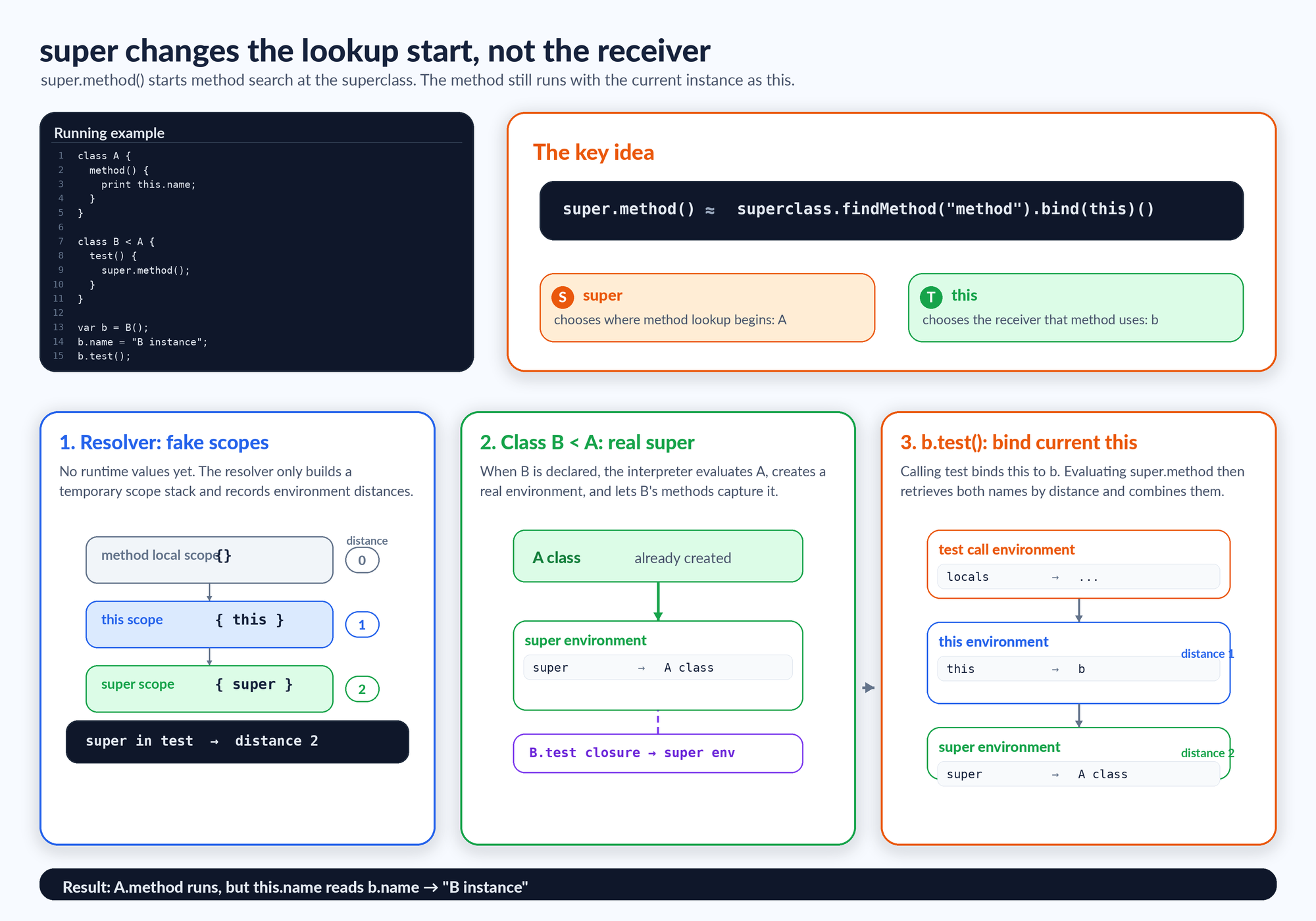
Figure 4. super 和 this 配合工作。super 指向 method search 的起点 class,this 指向真正接收 method 的 instance。
第 13 章最重要的一句话是:
super不是另一个对象。它只是另一个 method lookup 起点。
一旦这个点想通,剩下的实现问题就变成了 environment 如何摆放。
9. resolver 和 interpreter 如何一起让 super 工作
super 比 this 更微妙,因为它同时需要两个值:
superclass: method lookup 应该从哪里开始?
object:     this 应该 bind 到哪个对象?
resolver 不能保存这两个真实值。它仍然只能记录位置。
解析 subclass 时:
class B < A {
  test() {
    super.method();
  }
}
resolver 会在 methods 外面创建两个临时 scope:
super scope
  super

this scope
  this

method local scope
  ...
从 test 内部看,distance 是:
method local scope  distance 0
this scope          distance 1
super scope         distance 2
所以 resolver 会为 super expression 记录 distance。它还依赖一个布局规则:this environment 永远在 super environment 里面一层。
运行时,interpreter 用真实 environment 镜像这个 fake scope 布局。
执行 class B < A 时,它会先求出 A,然后创建 superclass environment:
super environment
  super → A class
接着创建 B 的 methods。这些 LoxFunction 会 capture 存着 super 的 environment。
之后访问 b.test 时,method binding 会创建 this environment:
this environment
  this → b
  ↓ enclosing
super environment
  super → A class
最后执行 super.method() 时,interpreter 按 resolver 记录的 distance 取值:
int distance = locals.get(expr);
LoxClass superclass = (LoxClass) environment.getAt(distance, "super");
LoxInstance object = (LoxInstance) environment.getAt(distance - 1, "this");
LoxFunction method = superclass.findMethod(expr.method.lexeme);
return method.bind(object);
这个 distance - 1 就是关键。resolver 记录了 super 在哪里。因为 jlox 控制 environment 的布局,所以当前 this 一定比 super 近一层。
于是 super.method() 的完整故事是:
Resolver:
  记录 super 将来在哪里
  安排 this 在 super 里面一层

Interpreter 执行 class declaration:
  创建 super → A class
  让 B 的 methods capture 它

Interpreter 访问 method:
  bind this → b

Interpreter 执行 super expression:
  按 distance 取 superclass
  按 distance - 1 取 this
  从 superclass 开始找 method
  把找到的 method bind 到当前 this
不需要一套单独的 OOP runtime。
10. 最后压缩成一个 mental model
到最后,class 系统可以压缩成一张表。
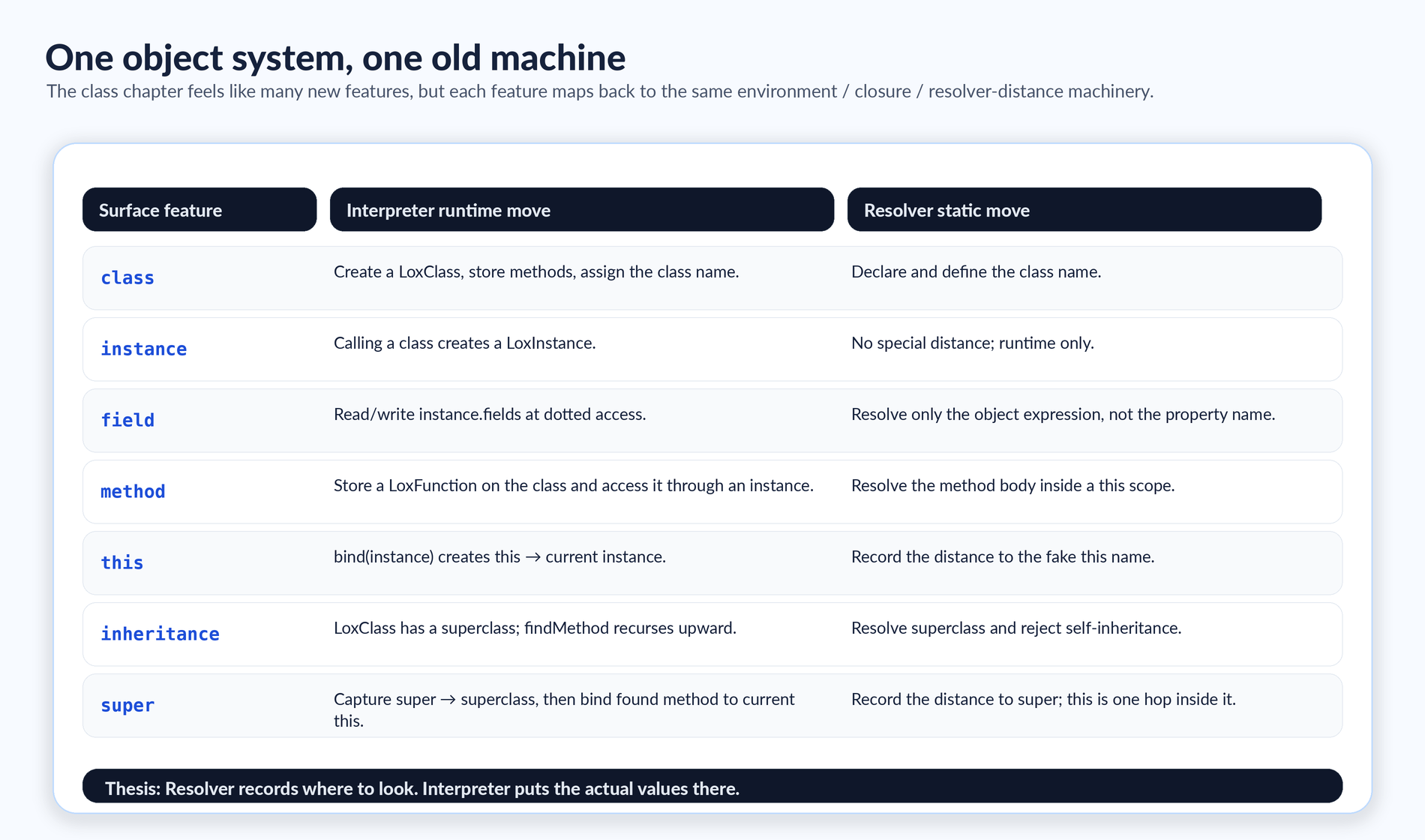
Figure 5. 每个 OOP 特性最后都回到同一套实现词汇:environment、closure、resolver distance。
整篇文章可以收束成两行:
Resolver:   提前算好名字应该去哪里找。
Interpreter: 运行时把真实值放到那些位置。
对 this 来说,resolver 先说 this 在哪里;interpreter 后来把 this bind 到当前 instance。
对 super 来说,resolver 先说 super 在哪里;interpreter 后来把 superclass 放进去,再把找到的方法 bind 到当前 instance。
对 method 来说,class 保存可复用的 function;instance 提供 receiver。
对 field 来说,instance 保存数据;class 不提前声明字段。
这就是为什么所有组件连起来以后,对象系统反而显得很小。
jlox 没有因为 class 到来就停止使用 environment model。相反,它把这个模型用得更彻底了。
Closing thought
class 常常让人感觉像是语言里一套有私有规则的功能。但在 jlox 里,如果把 class 看成 function 和 closure 的延伸,它就没有那么神秘。
method 是一个带 receiver environment 的 function。
initializer 是 class 自动调用的 method。
inheritance 是递归的 method lookup。
super 是被 capture 的 superclass 加上当前 this。
resolver 铺路。interpreter 填值。同一台小小的 runtime 机器,把语言从 function 带到了 object。